Start with a Real Decluttering Pass
Pulling clothing out of your closet for a seasonal swap is the perfect moment to actually look at what you have. If it’s been months since you’ve worn something, that’s usually a sign it’s time to let it go. Prime closet space should go to the things you actually wear — not the things you’re keeping out of guilt or “just in case.”
This isn’t just about clothing, either. Shoes, boots, scarves, hats, and other seasonal accessories deserve the same honest look.
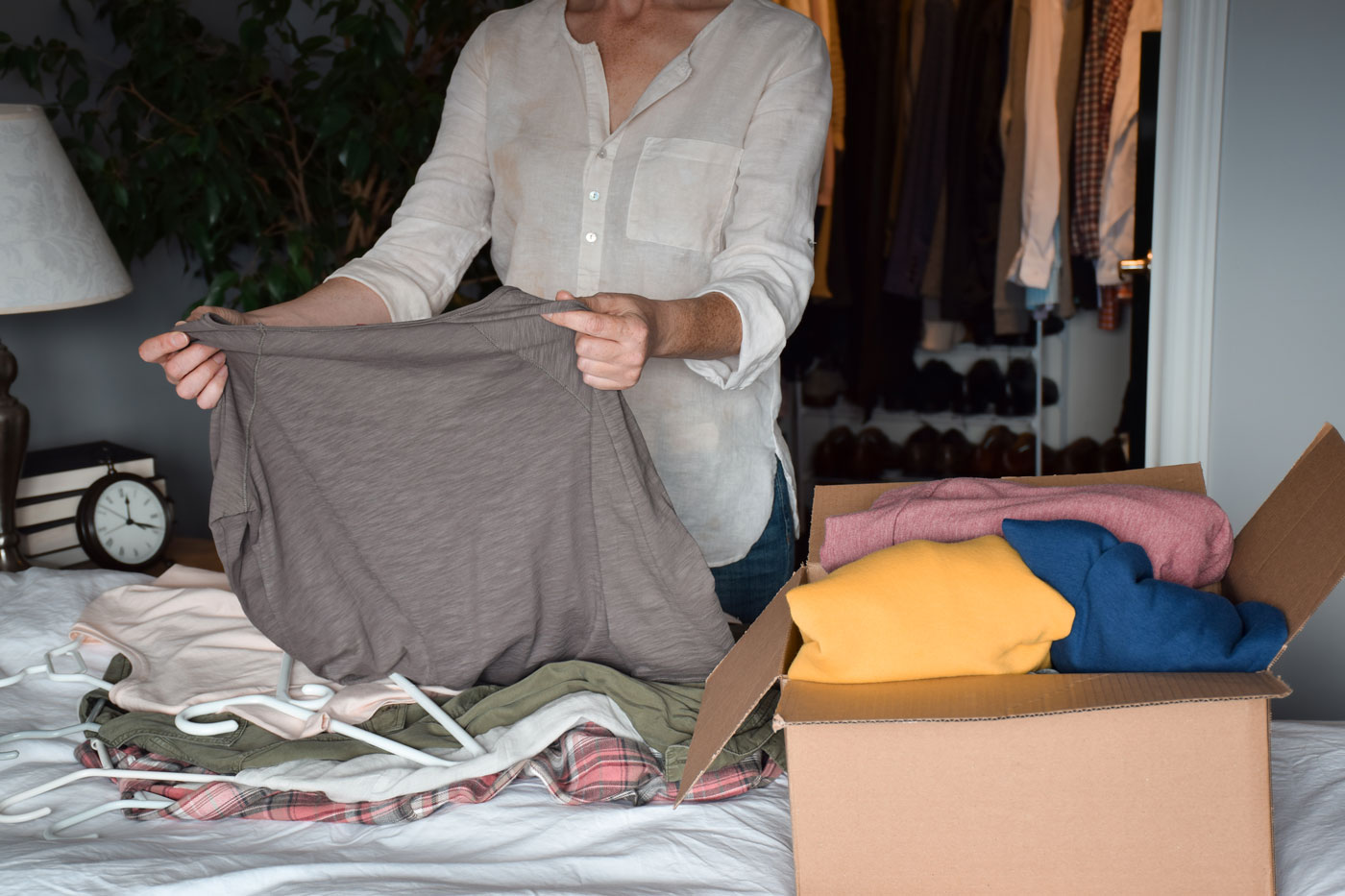
Give Good Items a Second Life
If what you’re purging is still in good condition and a current style, consider taking it to a local resale or consignment shop. You might earn a little extra cash, and most shops are happy to donate whatever they don’t take, so nothing goes to waste either way.
Clean Before You Store
Before anything goes into storage, make sure it’s clean and in good shape. Set aside anything with holes or tears to either repair or donate. Storing soiled or damaged clothing just means dealing with the same problem again next season and sometimes the clothes get worse as they sit with stains.
A Quick Boot-Storage Hack
Women’s tall boots are notorious for losing their shape in storage. Lay them flat to avoid creasing, or use boot inserts to help them keep their form. Here’s a favorite trick of mine: pool noodles. They’re inexpensive, easy to cut to size, and work just as well as a store-bought insert.
Don’t Pack Away Everything
Even with a seasonal system, I always recommend keeping a small set of transitional pieces in your closet year-round. Cincinnati weather doesn’t always cooperate with the calendar, and having the right staples on hand makes those in-between weeks much easier. A few essentials to keep accessible:
-
Lightweight sweaters & sweatshirts
-
Jeans
-
Layerable shirts
-
Athletic shoes
-
Closed-toe dress shoes
-
A rain jacket & rain boots
Choosing the Right Storage Option
Once you’ve decluttered, cleaned, and set aside your transitional pieces, you’ll need a place to store the off-season clothing. A few options work well, depending on your space:
STORAGE BINS
Bins are a great choice if you have a basement or dedicated storage area. Just be sure to label them clearly and store them in a consistent spot, so future you doesn’t have to go searching.
Under-the-bed storage bins on wheels
Under-the-bed storage bins on wheels are my personal favorite. They slide easily in and out, and most beds can fit two of these long bins on each side — making use of space that would otherwise go to waste.
vacuum storage bags
XL vacuum storage bags are another excellent option, especially if space is tight. They compress clothing down significantly, which means more items fit into less room. There’s also something a little satisfying about watching a full bag of clothes shrink down to a fraction of its size.